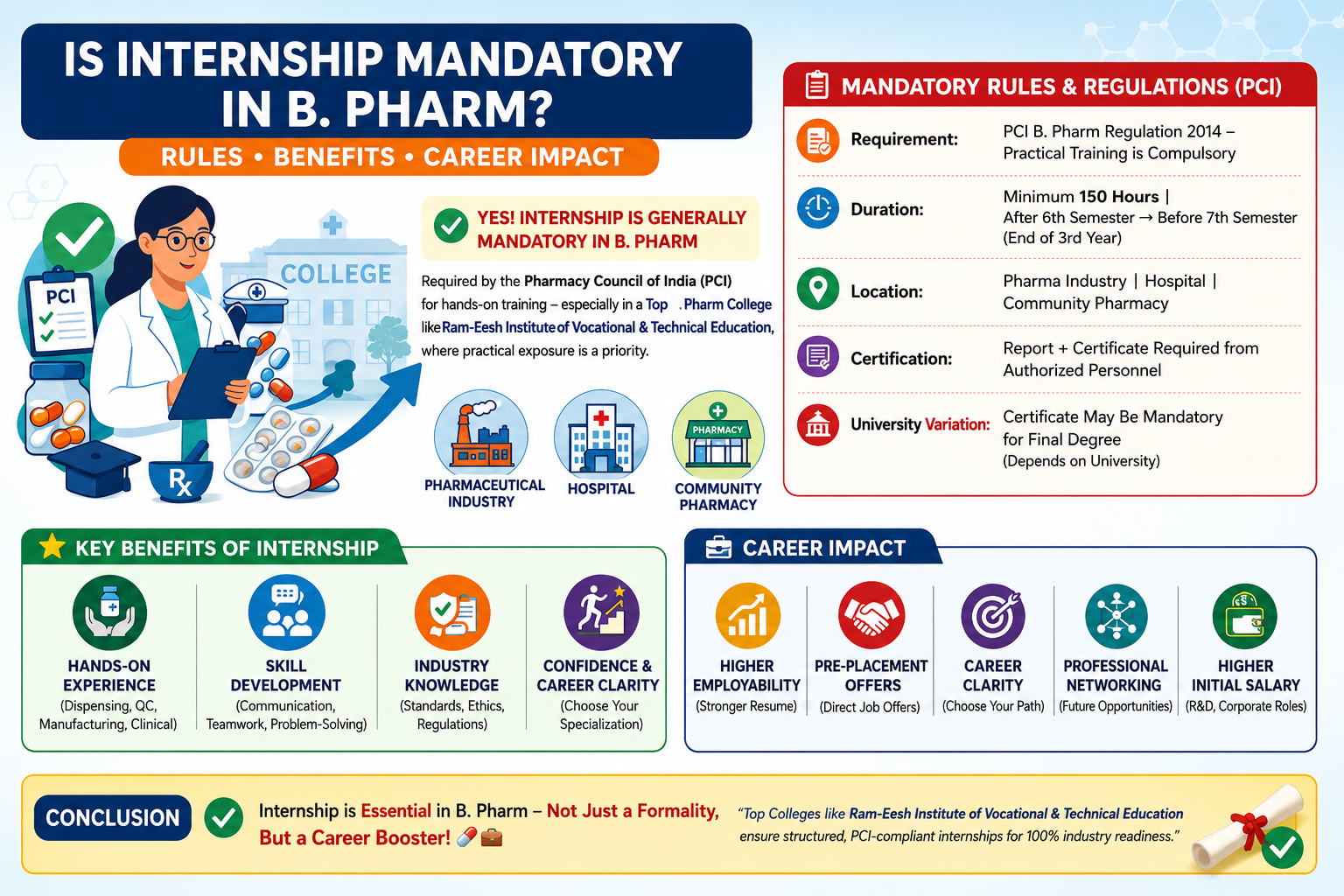
Is internship mandatory in B. Pharm? Rules, benefits, and career impact
Internships are generally mandatory in many B. Pharm curricula in India to fulfil PCI (Pharmacy Council of India) requirements for practical, hands-on training. It bridges the gap between theoretical knowledge and industry application, especially when studying in a top B. Pharm college where practical exposure is prioritized.
Institutions like Ram-Eesh Institute of Vocational & Technical Education ensure that students receive proper industry exposure through structured internship programs aligned with PCI guidelines.
Mandatory Rules & Regulations (PCI)
- Requirement: As per the Pharmacy Council of India (PCI) B. Pharm Course Regulation 2014, students are generally required to undergo practical training.
- Duration: Often, a minimum of 150 hours of practical training is required, usually conducted after the 6th semester (end of 3rd year) and before the 7th semester.
- Location: The training can be done in a Pharmaceutical Industry, Hospital, or Community Pharmacy.
- Certification: Students must submit a report and a certificate signed by the authorized personnel of the training organization to their institution.
- University Variation: Some universities make this certificate mandatory for the issuance of the final degree or for the convocation ceremony.
Key Benefits of Internship
Internships bridge the gap between classroom learning and professional practice. Some major benefits include:
- Hands-on experience in dispensing, manufacturing, quality control, or clinical settings
- Skill development in communication, teamwork, and problem-solving
- Better understanding of industry standards, regulatory practices, and ethical responsibilities
- Increased confidence before entering the professional world
Students also get the opportunity to identify their areas of interest—whether clinical pharmacy, industry, research, regulatory affairs, or marketing.
Career Impact
- Higher Employability: A well-structured internship adds credibility to one’s resume, making him more employable than a fresher with only theoretical knowledge.
- Pre-Placement Offers: Excellent performance during internships can lead to direct job offers from the company.
- Career Clarity: Helps in deciding which specialization to pursue, such as Clinical Research, Pharmacovigilance, or Regulatory Affairs.
- Networking: Provides an opportunity to connect with industry professionals, which can lead to future job opportunities.
- Higher Initial Salary: Candidates with internship experience often land better positions, such as in corporate offices or specialized R&D departments rather than just production plant roles.
Conclusion
While some institutions might have flexible rules, an internship is highly recommended, if not outright compulsory, in most B. Pharm programs to ensure the graduate is "industry-ready." It is a critical component for building a successful career in the pharmaceutical sector.