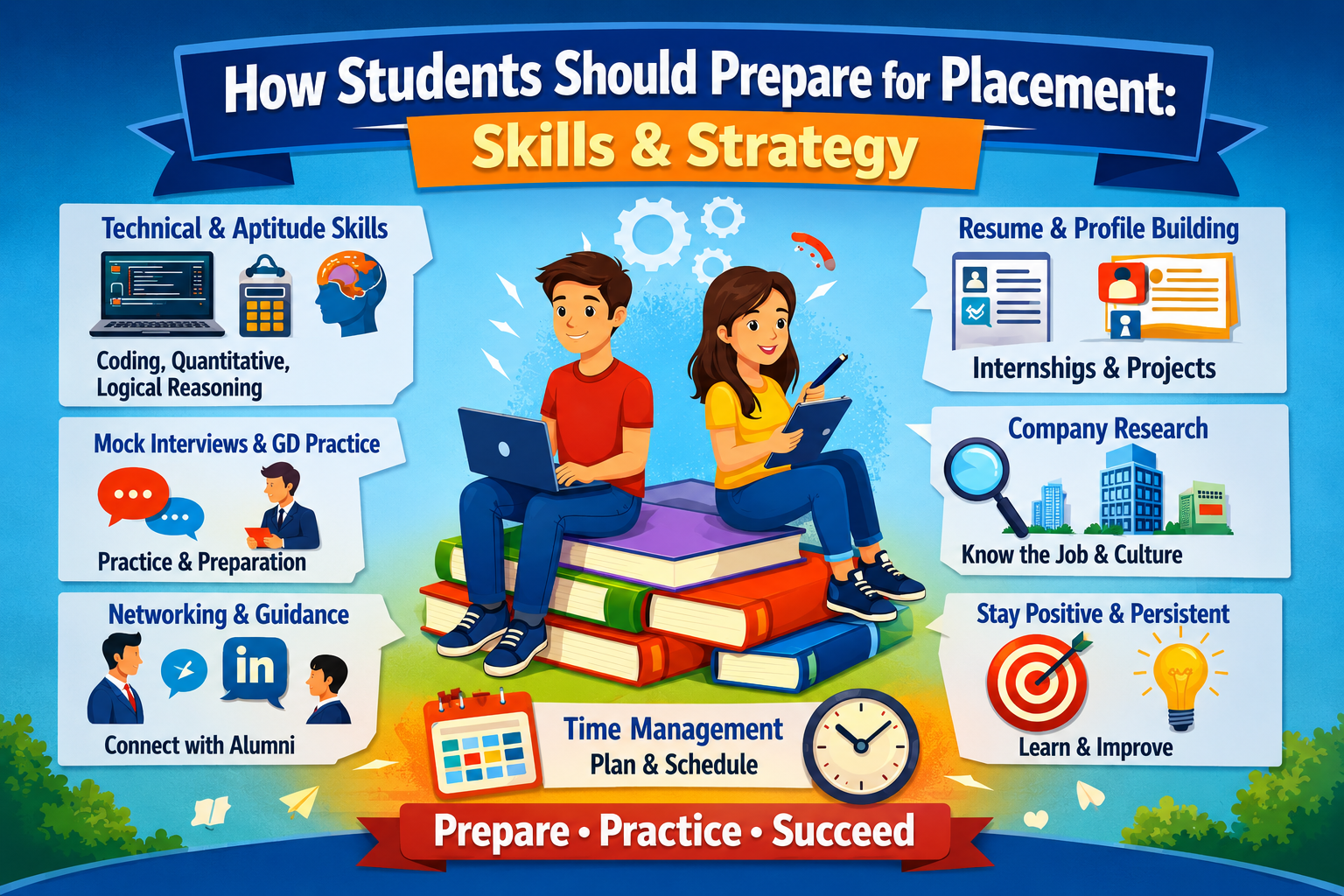
''How Students Should Prepare for Placement: Skills, and Strategy''
Introduction: Preparing for placements is a defining phase in a student’s academic journey, requiring a balanced approach of skill development, strategic planning, and continuous practice. Success does not come from last-minute efforts but from consistent preparation aligned with industry expectations.
Understanding the Placement Process: Students must first familiarize themselves with the typical recruitment stages, including aptitude tests, group discussions, technical interviews, and HR rounds. Knowing what to expect helps in targeted preparation and reduces anxiety during actual assessments.
Essential Skills to Develop: Building strong technical or domain-specific knowledge is fundamental, as companies prioritize candidates with clear conceptual understanding. Alongside this, students should enhance aptitude skills such as quantitative ability, logical reasoning, and verbal communication, which are often used as initial screening tools. Soft skills like teamwork, adaptability, problem-solving, and effective communication play a crucial role in differentiating candidates during interviews.
Building a Strong Profile: A well-crafted resume is essential for creating the first impression. It should highlight key achievements, internships, certifications, and projects relevant to the job role. Students should also focus on gaining practical exposure through internships, workshops, and real-world projects to strengthen their profile.
Strategic Preparation Approach: Time management is key—students should create a structured schedule that includes daily practice of aptitude questions, revision of core subjects, and mock interviews. Regularly practicing coding (for technical roles) or case studies (for management roles) helps improve confidence and accuracy. Additionally, researching companies before applying—understanding their culture, values, and job roles—enables students to tailor their preparation effectively.
Importance of Networking and Guidance: Connecting with seniors, alumni, and industry professionals can provide valuable insights into the recruitment process and expectations. Platforms like LinkedIn can be used to build professional networks and explore opportunities.
Handling Rejections and Staying Motivated: Rejections are a natural part of the placement journey. Instead of feeling discouraged, students should analyze their performance, identify areas of improvement, and refine their strategy. Maintaining a positive attitude and a growth mindset is essential for long-term success.
Over the last two decades, Ram-Eesh Institute of Vocational and Technical Education, Greater Noida has maintained a consistent and satisfactory placement record, especially in the pharmacy domain. The institute has achieved placement rates of around 70–85% for B. Pharm students, indicating steady career opportunities. The average package offered to students is around ₹3.5–5.6 LPA in recent years
Students have been placed in reputed pharmaceutical and healthcare companies such as Lupin, Sun Pharmaceuticals, Abbott Healthcare, Alembic Pharmaceuticals, and GlaxoSmithKline (GSK), showing strong industry linkage.
Conclusion: With the right combination of skills, structured preparation, and a strategic approach, students can confidently navigate the placement process and secure rewarding career opportunities that align with their aspirations. the institute provides regular campus recruitment drives, training programs, and industry exposure.